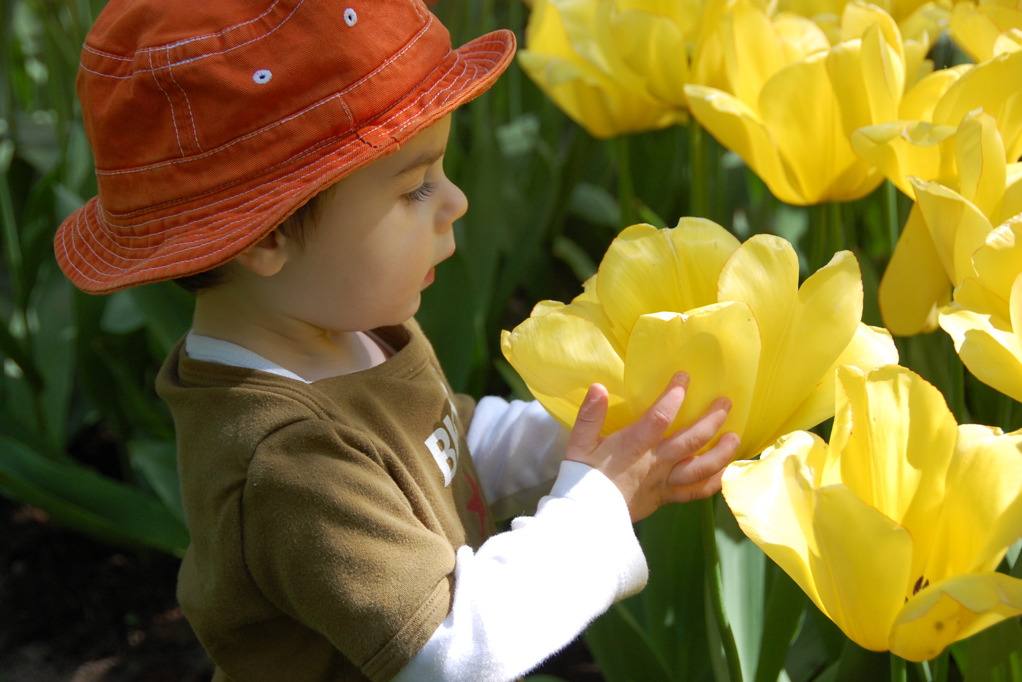
the dutch east india company was founded in 1602 and monopolized both asian and european trade for two centuries, a period known as the dutch “golden age.” a wealthy dutch merchant class was established and the netherlands was the center of some of the greatest achievements in art and academia (think rembrandt, vermeer and hals, the invention of the pendulum clock, the discovery of bacteria, the first modern stock exchange…) at the start of this era, tulips were imported to holland from the ottoman empire. these brightly hued flowers with petals growing in the shape of elegant teacups completely captured the dutch and became highly valued. the “tulpiere” vase was designed to hold individual stems, as each blossom was considered so precious. by 1636, the tulip bulb was the fourth leading dutch export, following gin, herring and cheese and “tulpenmanie” was at its height. tulips became so expensive that they were treated as a form of currency and a speculative frenzy ensued. it is said that one canal mansion was offered in trade for just ten rare bulbs. in 1637, the tulip market crashed after buyers in haarlem refused to show up to a scheduled auction and make good on payment. some believe that the haarlemmers stayed home because the bubonic plague was going around and they didn’t want to stand around in a big, infected crowd. since this was long before purell’s product launch in 1988, it is completely understandable. the burst of the “tulip mania” bubble did not have a lasting impact on the dutch economy, but it did effect the dutch psyche and is considered a reminder to stay grounded when making financial decisions. tulips continue as a beloved and iconic symbol of the netherlands (as do gin, herring and gouda, also popularized during the golden age) and today’s dutchies still love to chat about the period in history when a country the size of maryland fairly dominated the world.
Read Moretravel
pompadour
i moved to amsterdam in august, but you wouldn’t have known it was summer because of all the rain. there is the general misting present most days that you can still walk around in and then there are the serious downpours where you need to go inside. one of my earliest rain-evading discoveries was the chocolate shop, pompadour. this “gezellig” (dutch word for cozy, but meaning so much more) patisserie was located just around the corner from my apartment. it was almost a holy place for me. the interior is beautiful…rich, intricate, rose-colored wallpaper with warm, carved wooden moldings cut for the town hall of mortsel in 1895 and imported and repurposed, striking light fixtures evoking wild flowers or some kind of nature and inviting little marble cafe tables. there was just about no trouble that couldn’t be soothed away by having a cup of mint tea at pompadour. the tea was served in a large, clear glass of hot water with a couple of fresh mint stalks tucked in, accompanied by a delicious almond cake on the side. and i haven’t even gotten to the gorgeous chocolates and little cakes that looked like works of art.
Read Morenijntje (nine-cha)
i moved to amsterdam when i was three months pregnant with my first child. i had never spent any time there and like many americans, i associated the netherlands with wooden shoes, tulips, marijauna “coffee shops” and the red light district. i was leaving behind my family, my pacific ocean and my super-fun job styling the windows for banana republic. the whole move happened so quickly i barely had time to process what i was getting myself into and what i was going to do with myself when i got there, besides being pregnant. one of my favorite work friends suggested i start styling the red light windows. i could rework them every season with different themes like we did at banana and dress the women in something beyond tiny, white bikinis that glow iridescent in the intense red lights.
Read More